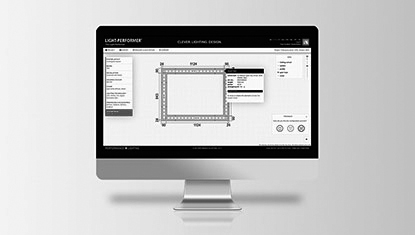
Code finder
Find individual luminaires quickly and easily
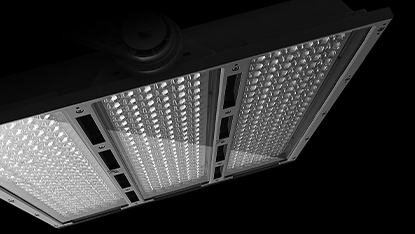
Advanced search
Find your ideal lighting solution faster with technical filters
Start the search
Select your country
Europe
North America
Asia
Australia
If your country is not among those available, you can consult the website International

Designing an agitator requires careful consideration of various factors, including tank dimensions, fluid properties, and mixing requirements. Using Microsoft Excel (XLS) can simplify the calculation process, allowing for quick and accurate determination of agitator design parameters. By creating a template XLS file, engineers can easily perform calculations and optimize agitator design for various applications.

| Parameter | Unit | Input | Calculation | | --- | --- | --- | --- | | Tank diameter | m | | | | Tank height | m | | | | Fluid density | kg/m³ | | | | Fluid viscosity | Pa·s | | | | Agitator speed | RPM | | =(4 Q)/(π D^3) | | Power consumption | kW | | =(2 π N T)/1000 | | Torque | Nm | | =(P)/(2 π*N) |

An agitator is a critical component in various industrial processes, including mixing, blending, and homogenization. Proper design of an agitator is crucial to ensure efficient and effective mixing, while also minimizing energy consumption and preventing damage to the equipment. This text aims to provide an overview of the key considerations and calculations involved in designing an agitator, with a focus on using Microsoft Excel (XLS) for calculations.

Products search
You can search for products in our catalog by entering here the name or the code of the product or accessory.